Blackwood
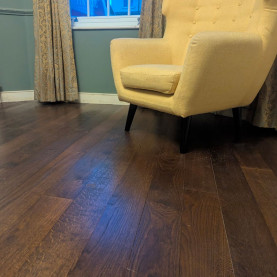
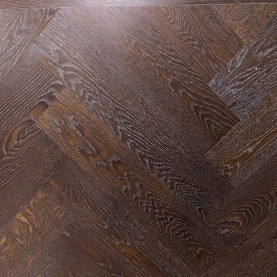
Blackwood: This rich, deep black hue is infused with undertones of dark espresso and charcoal, creating a sleek and refined appearance. The striking Blackwood floor colour is the epitome of modern elegance and...



This distinctive ancient bog oak floor, with its dark tones and rippled hand scraped texture, was originally installed over a decade ago as part of a major home remodelling project. Over the years, the floor had suffered from neglect, the arrival of a lively family dog, and an unsuccessful repair and refinishing attempt that left it in a poor state. Despite this, the owners remained deeply attached to the unique ripple effect and were determined to preserve this defining feature at all costs.
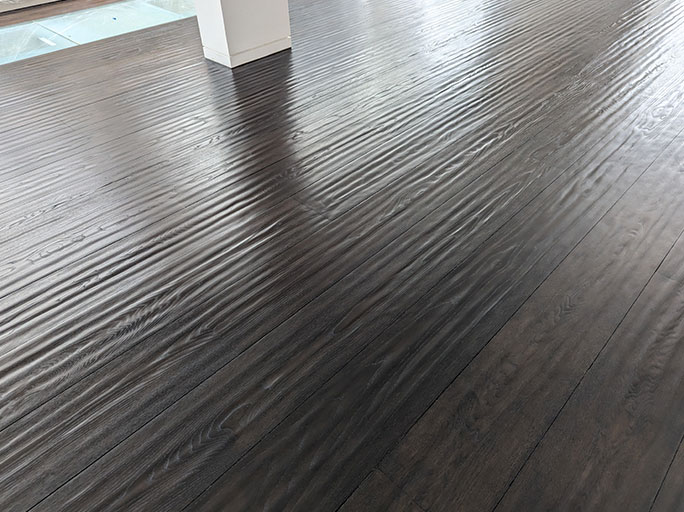
Restoring a beloved ancient bog oak floor.
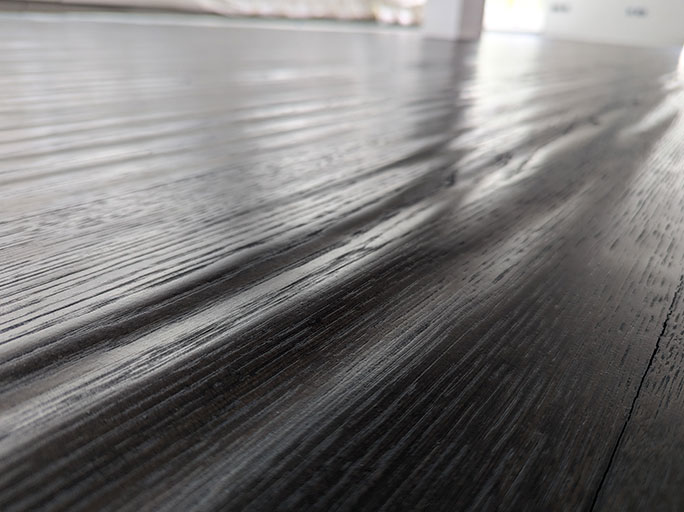
This floor restoration project required careful revival.
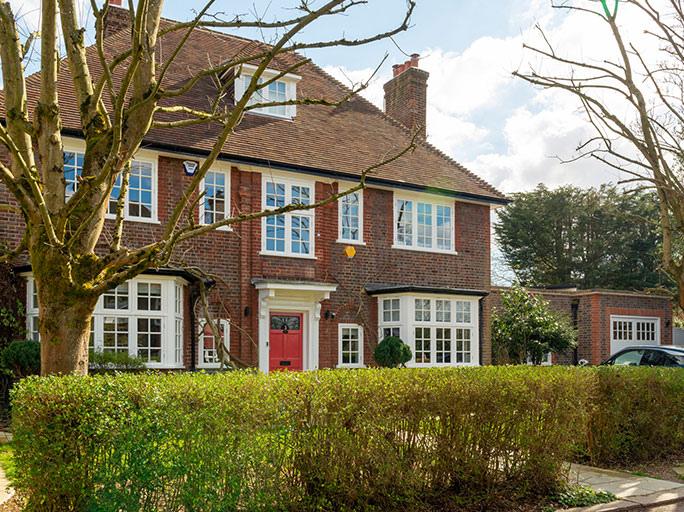
The rich tones of the ancient bog oak has depth and character.
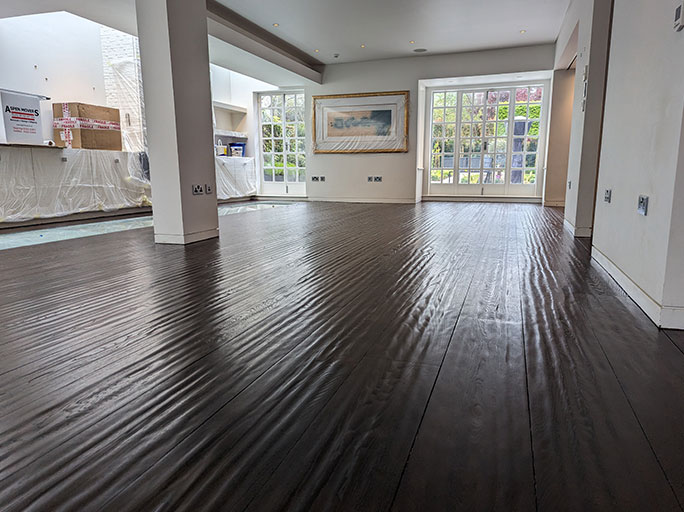
The clients were determined to keep the unique ripple effect of the floor.
We tested several approaches to restore the floor while protecting its distinctive hand scraped character. Hand scraping alone was our first step, however it did not produce a sufficiently smooth or consistent finish. By closely studying the existing surface, we were able to rediscover the original method used. Subtle details, such as grooves flowing seamlessly from one board to the next, confirmed that the texture was created on site rather than in a factory.
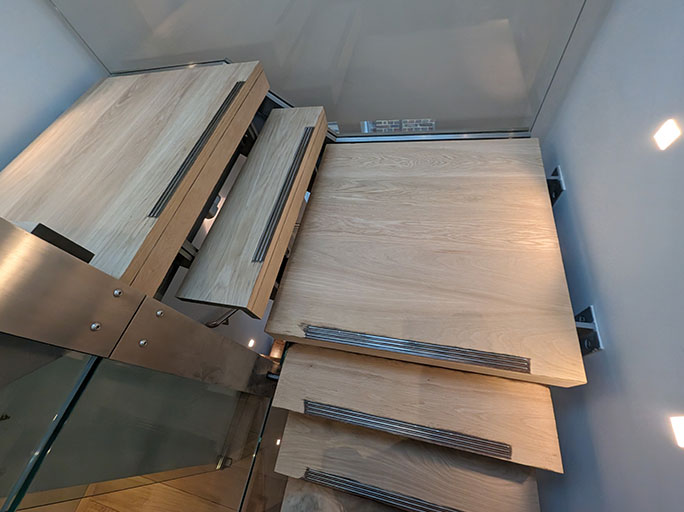
Several approaches were tested to protect its scraped effect.
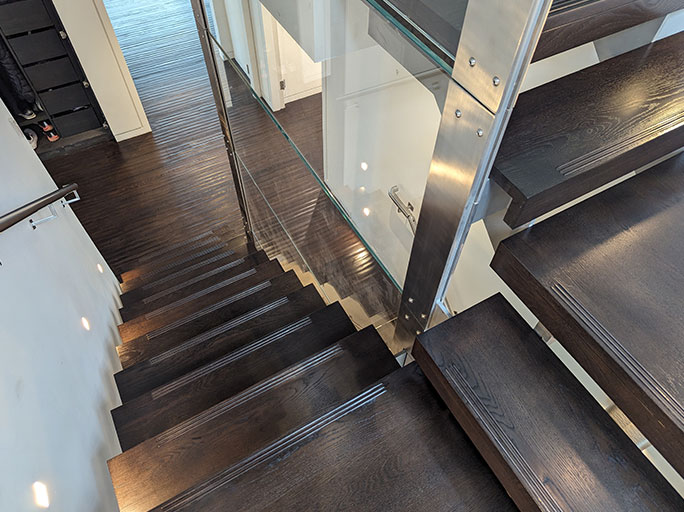
Hand scraping didn’t produce a sufficiently smooth or consistent finish.
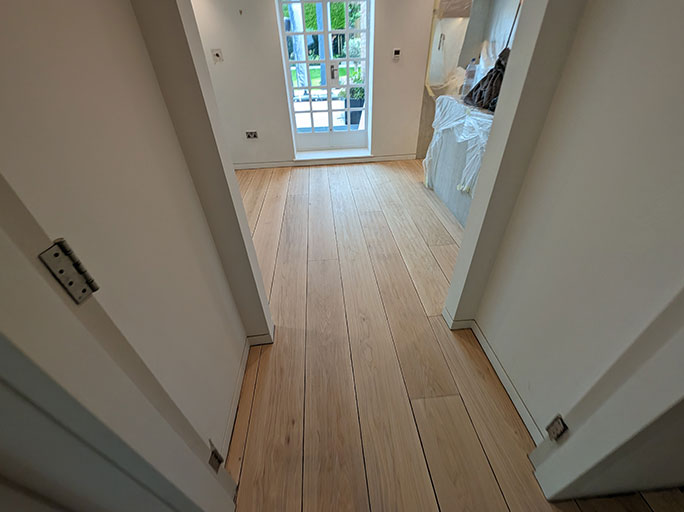
Hand held sanders offered the precise control needed for this highly specialised work.
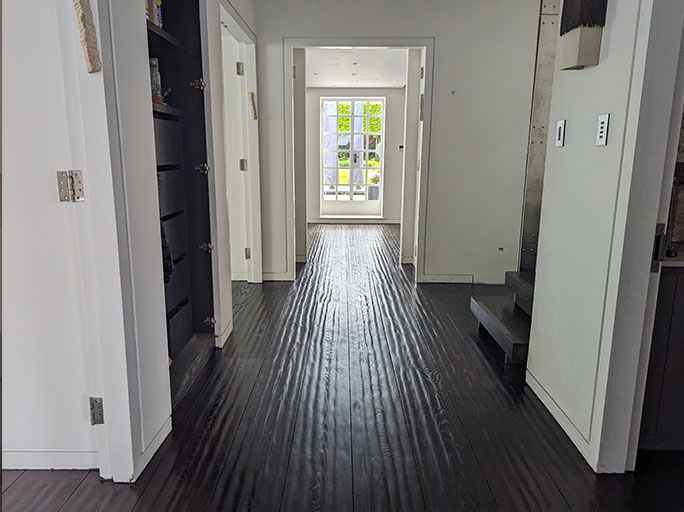
Extreme attention was required to avoid over sanding.
To achieve the correct result, we used Festool Rotex RO 150 hand held sanders, which offered the precise control needed for this highly specialised work. Larger sanding machines could not be used, as they would have destroyed the hand scraped effect entirely. Using three of these sanders continuously throughout the project, we were able to recreate the deep, smooth ridges with consistency and care. Extreme attention was required to avoid over sanding, as the valleys between the ridges are fine and sit close to the plywood layer beneath.
We chose to finish the newly sanded floor with oil rather than lacquer, as the limited remaining thickness meant this would be the final full sanding the floor could accommodate. An oil finish allows for ongoing annual maintenance, helping to preserve the floor’s condition without the need for further invasive sanding. We applied a bespoke Fin Wood blend of Osmo Polyx satin oils, carefully selected to enhance the depth and character of the timber.
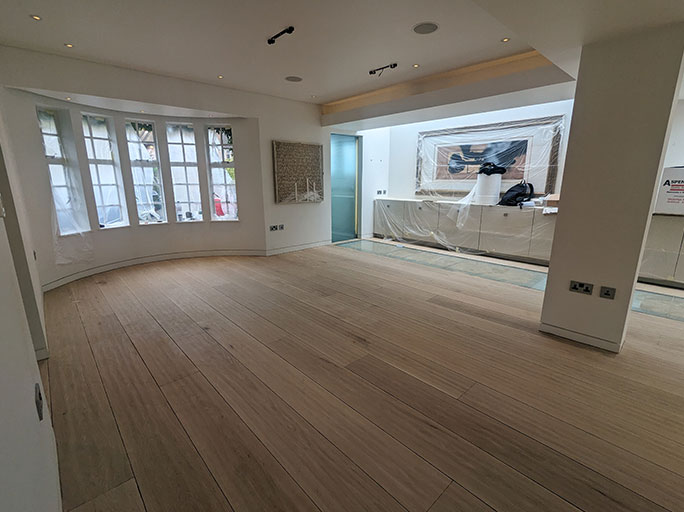
The floor was fished with oil rather than lacquer.
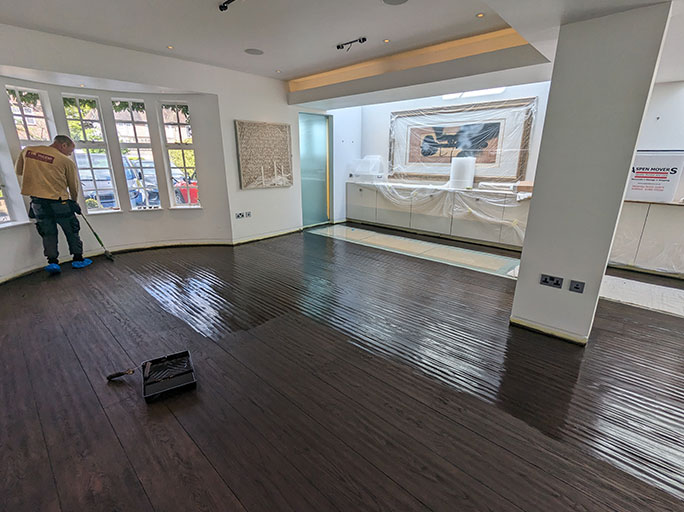
Oil finish allows for ongoing annual maintenance.
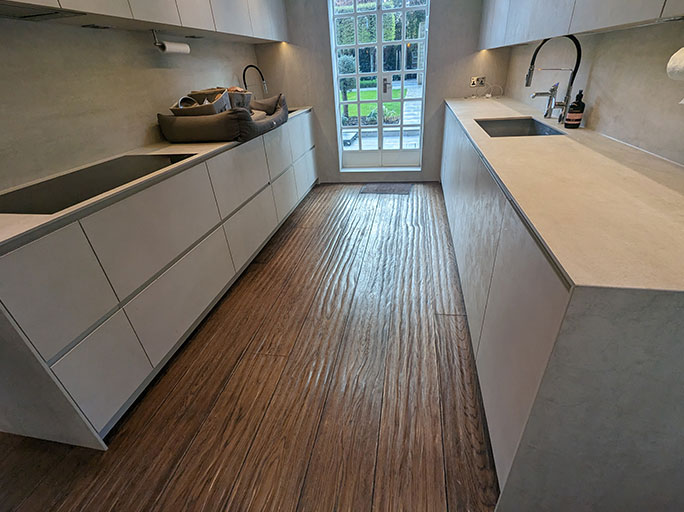
After sanding, a bespoke blend of Osmo Polyx satin oils was applied.
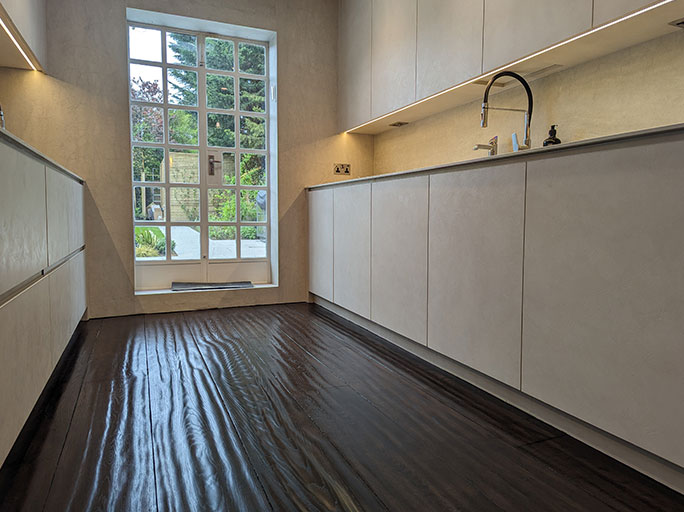
Maintenance visits have been undertaken to keep the floor looking its best.
The maintenance programme involves deep cleaning, re oiling, and restoring any particularly worn or damaged areas where possible. While lacquer sits on the surface and offers long lasting protection, even in high traffic areas, its main drawback is that once it eventually wears through after years of heavy use, the only remedy is to sand and re lacquer the entire floor.
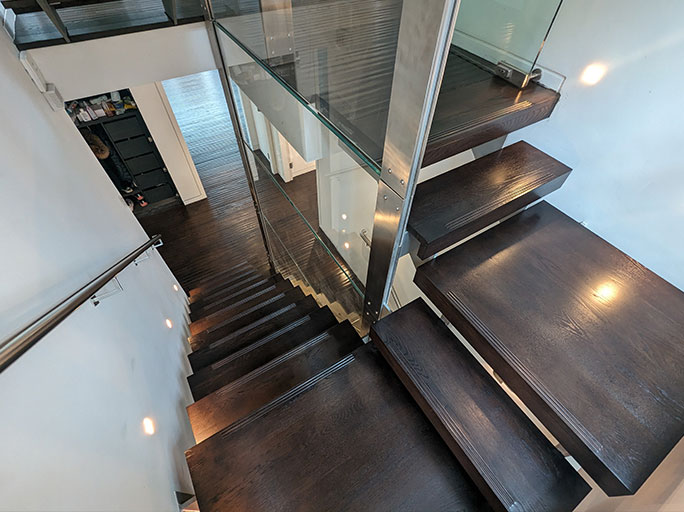
Maintenance involves deep cleaning, re-oiling and restoring any particularly worn areas.
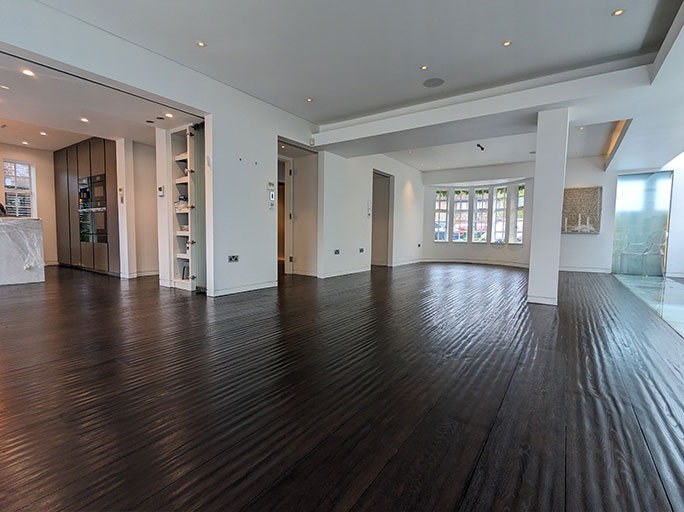
The clients were delighted with the final result.
The clients were delighted with the result, and we have already carried out two successful maintenance visits to keep the floor looking its best.
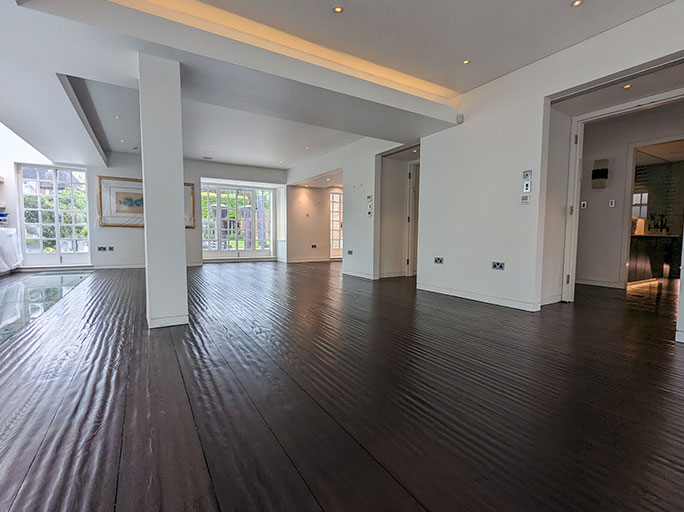
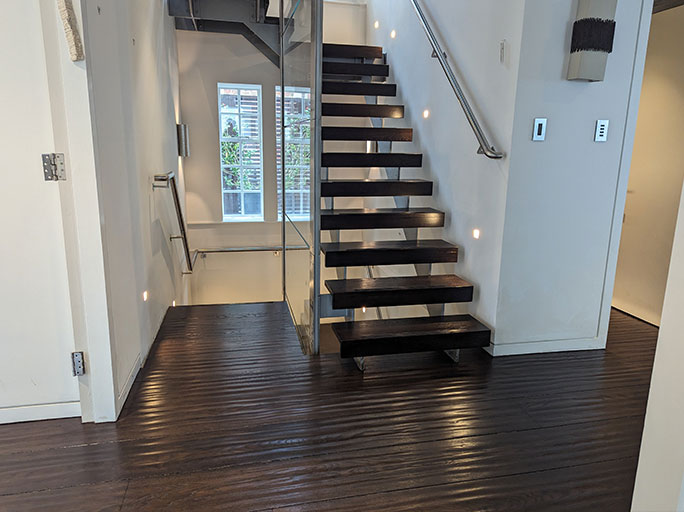
Location: Hampstead Heath N2
Please sign in first.
Sign in